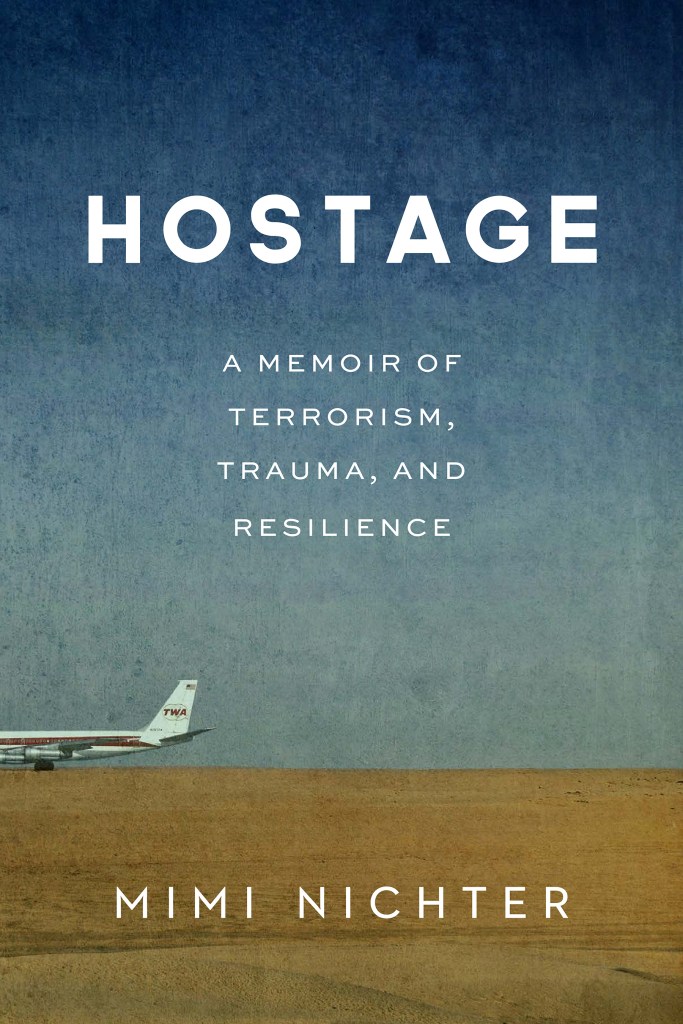
What happens to those stories we just move on from because no one around us can truly understand them? That was the question I kept asking myself as I tore through Mimi Nichter’s Hostage: A Memoir of Terrorism, Trauma, and Resilience.
In September 1970, Mimi Nichter was headed for New York and her senior year of college after a summer in Israel when her flight was hijacked. Landing in a remote stretch of the Jordanian desert, TWA Flight 741’s passengers abruptly became hostages. In Hostage (Potomac Press, an imprint of the University of Nebraska Press), Nichter walks us through the long days when she did not know if she’d ever return home. And while Hostage is a dramatic story about the extraordinary experience of being a political hostage, it is also a quiet look at how those memories we’ve cordoned off sometimes return later to ask us to make sense of them.
Below Mimi talks about the experience of writing this riveting memoir. Lots of fantastic advice and inspiration here particularly for those trying to write memoir after writing as an academic or journalist or anyone hoping to write a story from decades past.
BTW, copies of Hostage have just started to ship. I highly recommend you get a copy right away, and then you start it when you can stay up late as it’s a very hard book to put down.
Theo Nestor: What was the biggest challenge in writing Hostage and how did you overcome it?
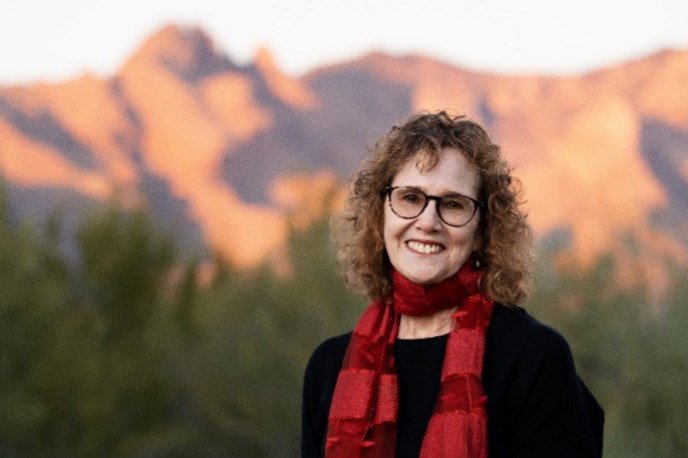
Mimi Nichter: One of the biggest challenges I faced was in dredging up buried memories. My memoir is largely based on events that occurred over fifty years ago, so to write the book I needed to remember details! For most of my life, I rarely talked about my hostage experience except to my closest friends. Even then, I would recount a shortened version, merely sharing that when I was twenty years old, I was on a hijacked plane and held hostage. I left out the scary parts and how close I’d come to death. When I did mention it, I got a headache and felt drained and saddened for days. Not telling the story seemed safer. Even in therapy, I never mentioned it. So, when I began to write the memoir, I literally had to pry open this box of memories that I had locked away inside long ago. It was frightening to revisit and have to relive each of the days I was held. I cried a lot as I remembered—a Kleenex was always in hand.
I overcame the challenge of facing buried memories through my writing. As the story emerged as words on the page, my fear of telling the story diminished. Day by day, little by little, word by word, I moved forward, unpacking the frightening story. I could feel that I was moving forward, letting go of the painful memories by finally giving voice to them.
Theo Nestor: What was something that surprised or delighted you in the process of writing Hostage?
Mimi Nichter: I was surprised by how much I needed to learn about craft to write this memoir. As an academic, I knew how to write about my own research—I had written four books and over seventy-five journal articles. But those all drew on other people’s experiences, not my own. As I began to write the memoir, I had the knowledge of how to write a book, but not how to write from my own voice with feeling. Fellow writers and writing teachers who read my early drafts said the memoir seemed a bit clinical—I was telling the facts and needed to go deeper. But how to do that?? Through writing, I began to process the experience and access my feelings. It took a long time. Through multiple layers of revision and the many workshops I attended, I learned how to go deeper.
Another big surprise was how changing the tense of my book from past to present tense—after it was all written—placed the reader into the hostage experience with me. It provided an immediacy that the past tense did not.
Finally, I’ve been delighted by the generosity of fellow writers as we all struggle, stumble, and hold each other up in the sometimes perilous journey of writing memoir.
Theo Nestor: What advice would you give to writers working on a memoir with the hope of publishing?
Mimi Nichter: When I was writing my book, I was driven to get it done, find an agent, and have it published. Looking back, I realize that if you try to bring your book into the world too early, you probably won’t have much success. I didn’t. My advice is don’t be in a rush to finish. Try to savor each stage—the remembering, the writing, the endless revisions, the challenges of how to stitch it together into a cohesive narrative. The process takes time. Let it marinate. Believe in your ability to finish and see the project to the end. Keep going! We need to hear your story!
Theo Nestor: Where can readers connect with you online?
Mimi Nichter: You can find me at:
Facebook: https://facebook.com/mimi.nichter
Instagram: @miminichter
Mimi Nichter is an award-winning cultural and medical anthropologist, public speaker, and a professor emerita of anthropology at the University of Arizona. She is the author/coauthor of four anthropology-related books focused on key cultural issues in the U.S. including body image and dieting, smoking and drinking, and social media use. Her forthcoming book, Hostage: A Memoir of Terrorism, Trauma, and Resilience, was a finalist for the 2026 Literary Award in Non-Fiction at the Tucson Festival of Books. Her essays have appeared in Newsweek and HuffPost Personal.




 Writing Is My Drink
Leave a Reply