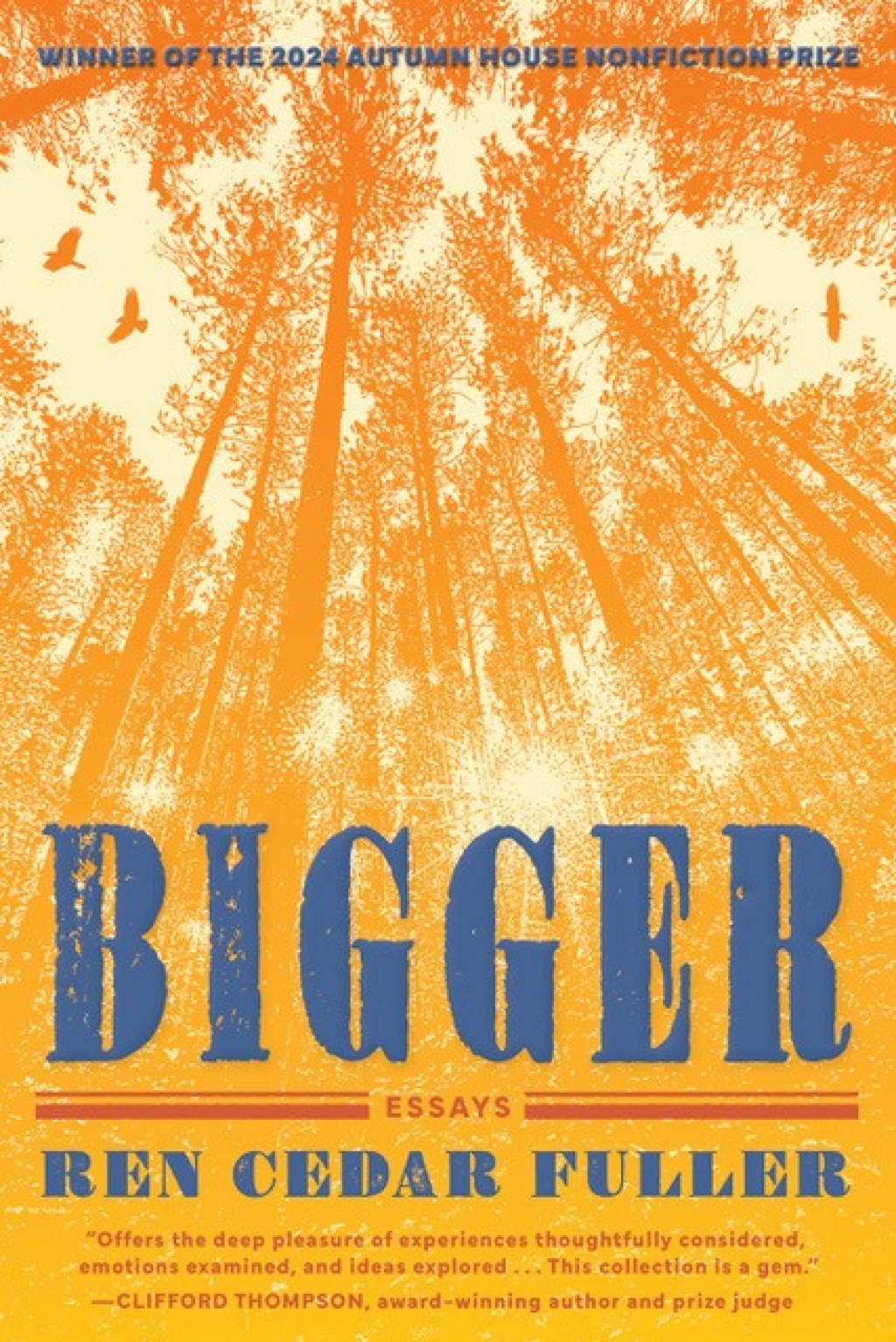
Remember during the pandemic when–after scrolling madly for hours through Zillow or Tinder or both—you’d jump on Instagram only to be slapped with a Shakespeare-wrote-King-Lear-during-plague meme? Well, some writers really were coming into their own during the pandemic, and one of them was Ren Cedar Fuller whose just-published essay collection, Bigger, won the 2024 Autumn House Press Nonfiction Prize. And for good reason; with crystal clear prose, the essays in Bigger explore relationships and modern life with an expansive and compassionate perspective often absent from contemporary discourse. Ren is here today with us to talk about her process in writing this beautifully realized new collection.
Theo Nestor: Welcome, Ren! Happy Pub Day! Tell readers a little bit about Bigger.
Ren Cedar Fuller: Bigger: Essays explores how loving people who are different from us can expand our world. I write about growing up with a father who was neurodivergent and a mother who was an immigrant. I write about my child coming out as transgender when they were in middle school and how our community responded. I write about having a hidden disability—my eyes do not make tears—and how that affects my emotions. And I write about watching my mother’s Alzheimer’s seem to carry her back to her childhood in Ecuador.
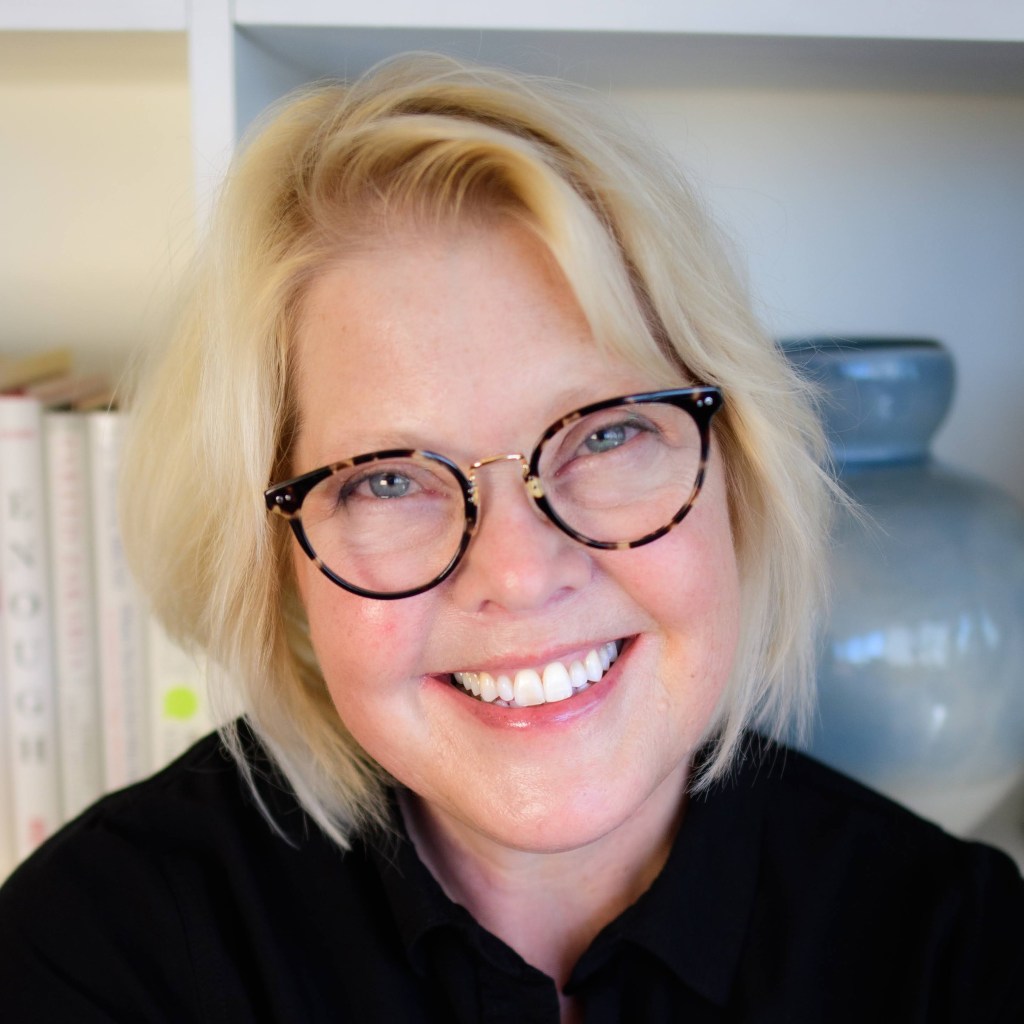
Theo Nestor: What was the biggest challenge in writing these essays and forming this collection, and how did you overcome it?
Ren Cedar Fuller: Each essay started with a memory: the strange rules my father had for my sisters and me; or how, when Indigo came out as trans to my husband Jason and me, it felt like a golden afternoon. With each essay, I drafted and workshopped through many revisions and felt frustrated because the story wasn’t becoming what it was supposed to be.
Each essay in Bigger has a different structure, but I didn’t plan it that way. And I didn’t start with structure. I had to know the story first. I experimented with multiple narrative or lyric structures for each essay, with complete rewrites, and finally a structure would click, and it felt like the story couldn’t possibly have any other form.
The biggest challenge in forming the collection was that most of my essays have lengthy, time-jumping chronologies and I had no clear way to order the collection. (I ended up trying to put the essays I thought were strongest first and last, and hiding the ones I thought were weaker in the middle.) My editor at Autumn House, Hattie Fletcher, helped me revise the order to create narrative flow to make the collection approach a memoir-in-essays.
Theo Nestor:What was something that surprised or delighted you in the process of writing these essays?
Ren Cedar Fuller: When I wrote my first essay, I thought, that’s it. That’s all I can do. And then I had an idea for another essay, and when that one grew into itself, I had another idea. It’s lovely to know I’ll never run out of ideas, that I’ll be in my nineties, typing at my laptop, and telling Jason, “Just a minute,” when he says dinner is ready.
Theo Nestor: What advice would you give to those working on an essay collection with the hope of publishing?
Ren Cedar Fuller: Look for the big question or theme that runs through your essays. In the first class I took with you, Theo, a student suggested we explore the same big question over and over with our writing. When I’d written a handful of essays, I read them to see if I have an overarching theme, and I do. I write about how people are different; different is hard; and different is good. (This is also something I talk about as a parent educator, so I suppose it’s the theme of my life.)
Submit some of your essays to literary journals. Many publishers use journal publication as a screening tool: Do others in the literary community recognize the value of your work?
Write more essays than will fit in your collection, then curate them based on theme, variety, and how they play with each other. I made a spreadsheet and listed questions, plot, characters, main scenes, favorite lines, etc. for each essay. It helped me see what was missing.
Don’t listen to the naysayers who say no one publishes essay collections by debut authors. That might be true for commercial publishers, but many university and small independent presses value discovering new writers. Research their reputations, then look for open submission periods and writing contests that don’t require you to have an agent.
Most importantly, write the book you believe in!
Theo Nestor: Where can readers connect with you online?
Ren Cedar Fuller: You can follow me on Instagram @ren.cedar.fuller and read more about my writing journey on my website: www.RenCedarFuller.com.
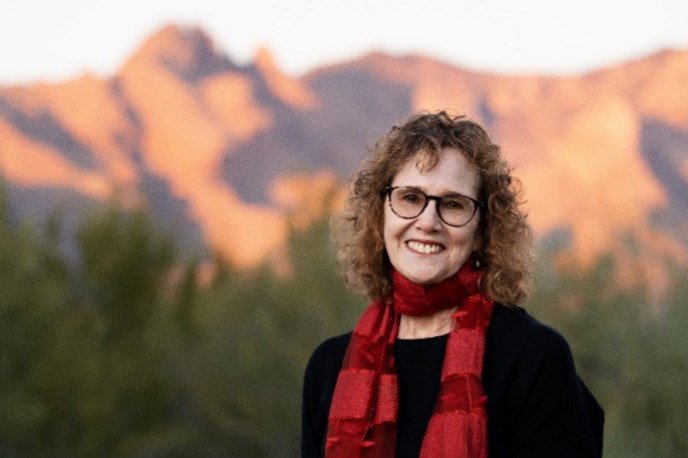
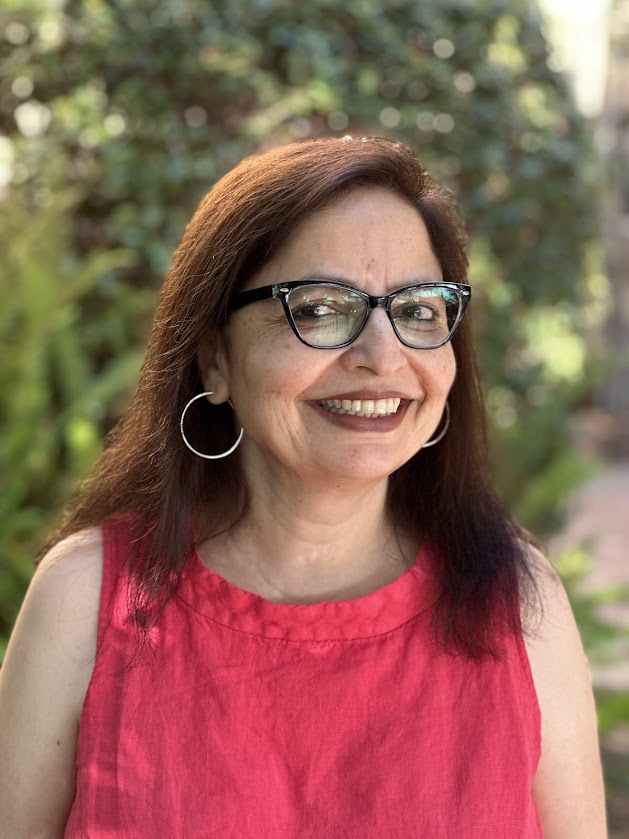
Ren Cedar Fuller’s debut book Bigger: Essays won the Autumn House Press Nonfiction Prize and was a finalist for the Iron Horse Prize and the Santa Fe Writers Project Literary Awards Program. Her essays have appeared in Hippocampus, New England Review, North American Review, and Under the Sun, and been nominated for a Pushcart Prize and Best American Essays. Ren is a parent facilitator at TransFamilies, an online hub for families with gender diverse children. After teaching public school, she founded a nonprofit preschool, where she continues teaching parent education. Ren lives in Seattle and loves to kayak slowly on the Salish Sea.

 Writing Is My Drink
Leave a Reply